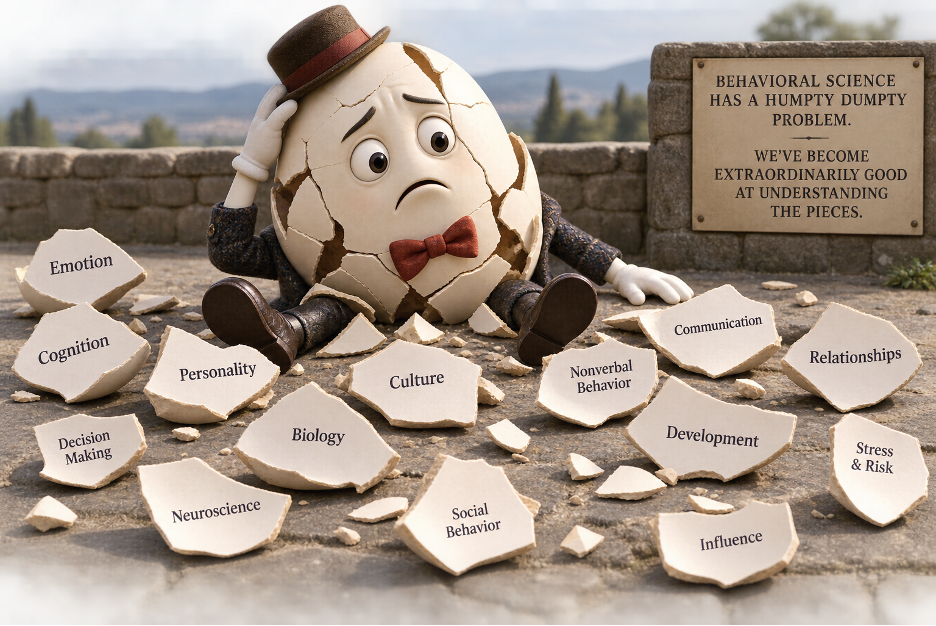
My Thoughts on Humpty Dumpty, Science, and Humility I have spent all my adult life working in three different worlds. For more than 40 years, I have been a scientist studying human behavior, particularly emotion, nonverbal behavior, and culture. As a scientist, I have tried to discover things that are reliably true about people. What…
Read MoreWhy Understanding People Is Harder Than We Think

From Group-Level Science to the Individual in Front of Us Introduction Something has been bugging me for decades. I have spent most of my professional life trying to understand people scientifically. Along the way, behavioral science has given us an enormous amount of valuable knowledge about human behavior. We know a great deal about…
Read MoreStudy: Can Dogs Read Human Facial Expressions of Emotion?

If you’re a dog owner, you may have had the feeling that your dog knows exactly how you’re feeling. A smile might bring an enthusiastic tail wag, while a frustrated expression can be met with a noticeably different response. But how much information can dogs actually gather just by looking at our faces? New research…
Read MoreHow the Infant Brain Tracks Their Mother’s Voice

A recent study published in the Journal of Neuroscience caught my attention because it touches on a question that has fascinated me for more than four decades: How can infants understand their mothers and caregivers long before they understand language? This question has been with me since my undergraduate days at the University of Michigan.…
Read More